Inside Deep Sleep
Deep sleep—also called slow wave sleep (SWS) or delta sleep—is the stage where your brain produces the slowest brain waves (delta waves: 0.5–4 Hz). This is the heaviest, most restorative part of your night.
Korir Cherinyit
Friday, 17 July 2026
Inside Deep Sleep
Sleep Stages, Brain Detox, and Why You’re Not Resting
By Cherinyit
Keto Diet Champions & Wellness Centre, Kenya
What Is Deep Sleep?
Deep sleep—also called slow wave sleep (SWS) or delta sleep—is the stage where your brain produces the slowest brain waves (delta waves: 0.5–4 Hz). This is the heaviest, most restorative part of your night.
Deep Sleep Snapshot
| Feature | What Happens |
|---|---|
| Brain waves | Slowest delta waves (0.5–4 Hz). |
| Eye movement | Slow, rolling movements. |
| Neurons | Neocortical neurons enter a "downstate" to rest. |
| Heartbeat & breathing | Very slow and rhythmic. |
| Muscles | Fully relaxed, occasional twitches. |
| Wakeability | Extremely hard to wake; you feel “pulled” back into sleep. |
Adults generally need 7–9 hours of sleep, with about 15–25% of that time in deep sleep (around 1–2 hours per night). The first deep sleep cycle is usually the longest (45–90 minutes), and later cycles are shorter. Unlike REM sleep (dreaming, active brain), deep sleep is where your body does the heavy repair work.
The 5 Stages of Sleep
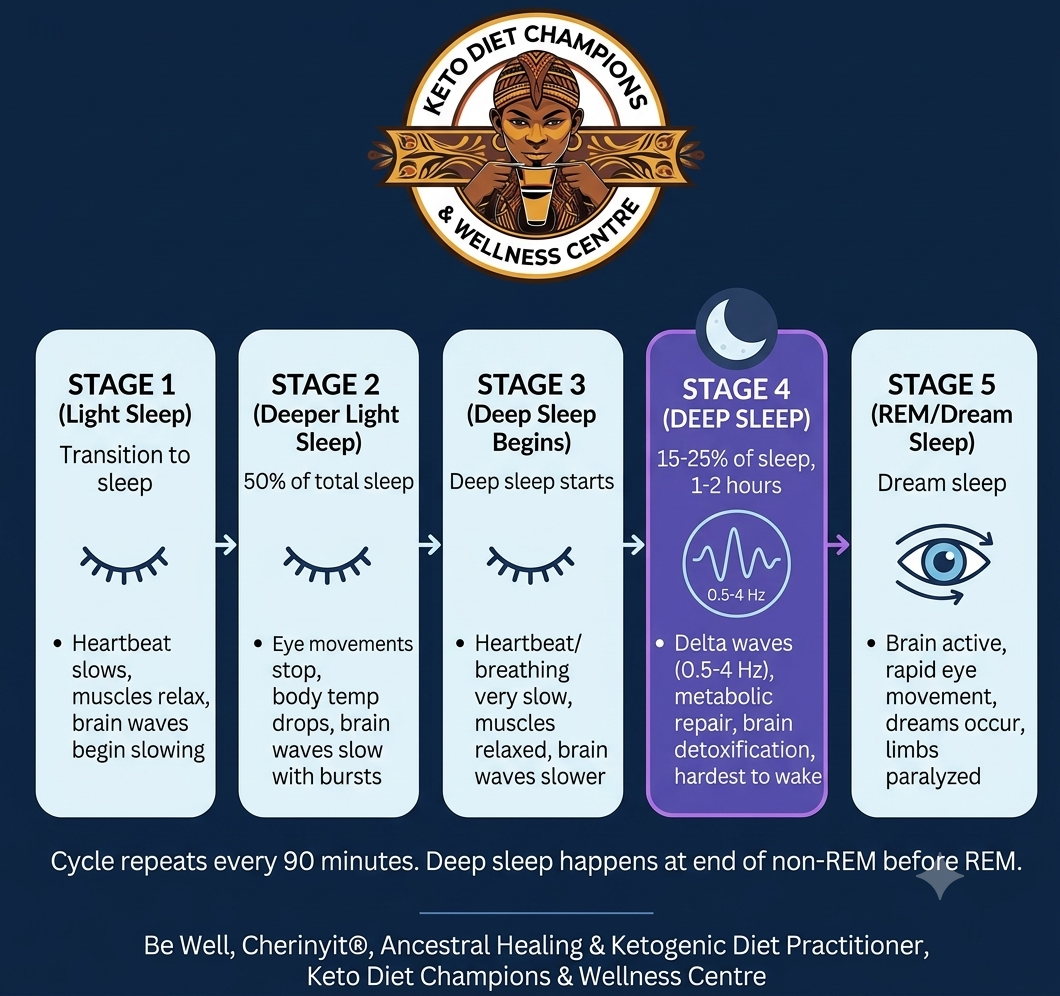
Your sleep cycles through five stages roughly every 90 minutes, alternating between non-REM and REM sleep.
| Stage | Type | What Happens | Duration |
|---|---|---|---|
| Stage 1 | Non-REM light sleep | You drift off; heartbeat, breathing, and eye movements slow; muscles relax but may twitch. | 1–7 minutes |
| Stage 2 | Non-REM deeper light sleep | Eye movements stop; body temperature drops; brain waves slow further with short bursts of activity; this stage makes up about half of total sleep. | ~50% of night |
| Stage 3 | Non-REM deep sleep begins | Heartbeat and breathing are very slow; muscles relaxed; deep sleep starts. | 10–30 minutes |
| Stage 4 | Non-REM deep sleep | Slowest brain waves (delta); hardest stage to wake from; main repair and detoxification happens here. | 15–25% of total sleep (1–2 hours) |
| Stage 5 | REM (dream) sleep | Brain is highly active; rapid eye movements; vivid dreams; heart rate and breathing increase; muscles are paralyzed to prevent acting out dreams. | 10–60 minutes |
Key point: Deep sleep (Stages 3–4) happens at the end of non-REM, before REM. This is your main healing window.
Why You Can’t Sleep: Hidden Root Causes
Sleep problems are more than “being tired.” They arise from a mix of thoughts, body, and nervous system.
Common Types of Sleep Issues
| Type of Sleep Issue | Description |
|---|---|
| Trouble falling asleep | Lying awake in bed, mind racing, body restless. |
| Frequent nighttime awakenings | Waking many times and struggling to fall back asleep. |
| Chronic insomnia | Ongoing sleep disruption lasting months or years. |
| Sleep apnea | Breathing interruptions and loud snoring that disturb sleep. |
Root Cause 1: Overactive Mind
An overactive mind keeps the body in alert mode. Common worries include:
| Worry (Kenya Context) | Effect on Sleep |
|---|---|
| Job security and career pressure | Brain stays in “work mode” late into the night. |
| Children’s school fees and future | Persistent financial anxiety. |
| Business failures or debt | Constant fear of loss and instability. |
| Family health struggles | Emotional weight that never switches off. |
Root Cause 2: Physical Body Tension
The physical body can block sleep even when the mind is tired.
| Factor in the Home | Impact on Sleep |
|---|---|
| Thin, hard mattress | Body soreness; frequent tossing and turning. |
| Hot, poorly ventilated rooms | Restlessness, sweating, shallow sleep. |
| Noisy neighborhoods | Frequent micro-awakenings and lighter sleep stages. |
Root Cause 3: Chronic Stress
Stress activates the sympathetic nervous system (“fight-or-flight”). Cortisol and adrenaline stay high, preparing you to run or fight, not sleep.
| Stress Pattern | Sleep Impact |
|---|---|
| Constant deadlines and money worries | Hard to wind down; delayed sleep onset. |
| Ongoing conflicts at home or work | Body stays tense; dreams may be restless. |
| “Always on” phone and social media | Nervous system rarely gets quiet. |
Root Cause 4: Trauma and Nervous System Dysregulation
Trauma leaves a deep imprint on the nervous system.
| Trauma Effect | Sleep Consequence |
|---|---|
| Hypervigilance (always scanning for danger) | Difficulty surrendering to deep sleep. |
| Nightmares or intrusive memories | Fear of sleep; disrupted REM and deep sleep. |
| Body tension and startle responses | Fragmented sleep and early awakenings. |
Brain Detox: The Glymphatic System
During deep sleep, the space between brain cells widens, allowing cerebrospinal fluid to wash through and carry away waste. This cleansing network is called the glymphatic system.
| Step | What Happens |
|---|---|
| 1 | Cerebrospinal fluid flows into brain tissue channels. |
| 2 | Toxins, proteins, and waste are carried along these channels. |
| 3 | Waste exits through drainage points and leaves the body. |
A key target is beta-amyloid, a protein strongly linked to Alzheimer’s disease. Deep sleep helps clear it.
*Melatonin: More Than a Sleep Hormone
*
Melatonin is known for making you sleepy in darkness, but it also protects your brain.
| Melatonin Function | Benefit |
|---|---|
| Reduces inflammatory signals | Lowers brain and body inflammation. |
| Acts as an antioxidant | Protects cells from oxidative stress. |
| Crosses the blood–brain barrier | Directly supports brain cell health. |
| Slows neurodegeneration | Helps protect against age-related decline. |
Melatonin rises in darkness. Bright lights and screens at night suppress it, blocking both sleep and brain repair.
Be Well,
Cherinyit®
Ancestral Healing & Ketogenic Diet Practitioner
Keto Diet Champions & Wellness Centre, Kenya
Disclaimer: This blog post is for educational and informational purposes only and is not medical advice. Always consult your doctor or qualified health provider regarding any medical condition or treatment.
```
Ready to Start?
Book a consultation today
Take the first step toward your health transformation with a KSh 300 consultation.
Book Now →