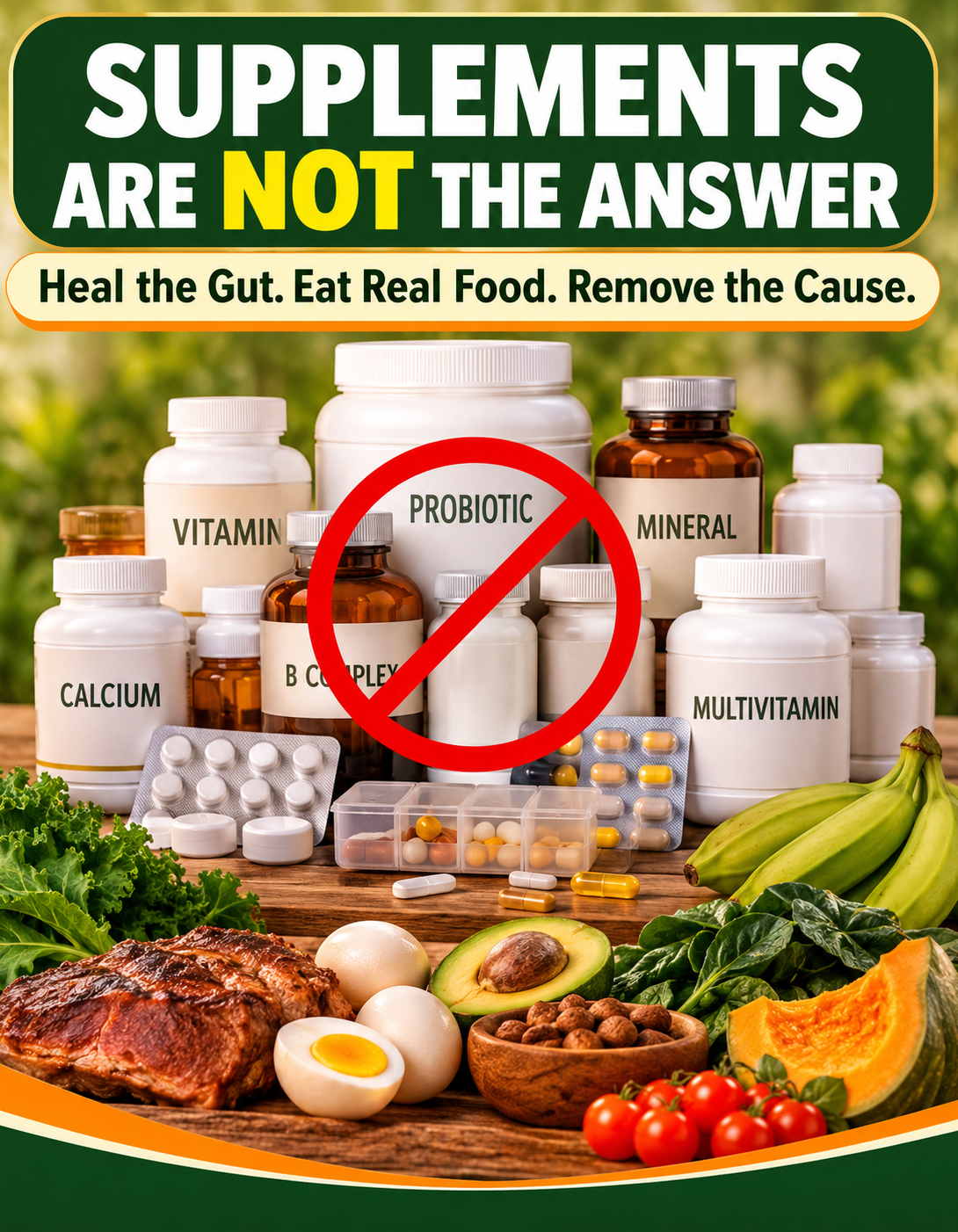
Supplements Are Not the Answer: Heal the Gut, Eat Real Food
For many people, it is removing ultra-processed carbohydrates, stabilising meal timing, calming the gut, and returning to nutrient-dense ancestral food.
Korir Cherinyit
Thursday, 19 November 2026
Supplements Are Not the Answer: Heal the Gut, Eat Real Food
At Keto Diet Champions & Wellness Centre, one of the first questions I am asked is: “Coach, which supplements should I take?”
My answer is usually simple: very few.
In Kenya, I see far more people struggling with a confused gut than a true vitamin deficiency. Heartburn, reflux, bloating, constipation, irregular bowel movements, SIBO-like symptoms, food sensitivities, fatigue, skin problems, joint pain, and stubborn weight gain often point back to the same place: an irritated, inflamed, poorly functioning digestive system.
When we remove ultra-processed carbohydrates, added sugars, seed-oil-heavy foods, constant snacking, and poor eating patterns, many clients begin reporting clearer digestion, less reflux, better bowel regularity, and more stable energy within about three weeks.
That is not magic. It is the body returning toward its ancestral design.
The Supplement Trap
The modern wellness industry has trained us to look for a pill for every problem.
Low energy? Take a supplement.
Poor digestion? Take a supplement.
Weight gain? Take a “fat-burning” supplement.
Weak bones? Take calcium.
But supplements cannot correct a lifestyle that keeps inflaming the gut, spiking blood sugar, disrupting hunger hormones, and feeding an unhealthy gut environment.
A supplement may occasionally be useful in a specific, confirmed deficiency or during a medically supervised situation. But it should never become the foundation of healing.
The foundation is real food, proper meal timing, a calm digestive system, and removing the foods that keep causing damage.
Vitamins Are Not Always Vitamins
Many people assume that because a nutrient is essential, taking more of it in a pill must be better. That is not always true.
Vitamin C became famous decades ago, with claims that huge doses could prevent colds, flu, and even cancer. Those hopes did not hold up. Vitamin C is essential for preventing scurvy, but megadoses are not a cure for the chronic diseases of modern life.
Vitamin E was later promoted as an antioxidant that would protect the heart. Large trials did not support the promise that vitamin E supplements would prevent heart disease or stroke.
Vitamin B supplements were also promoted aggressively, especially for lowering homocysteine, a marker associated with cardiovascular risk. Lowering a marker on a blood test is not the same as preventing a heart attack, stroke, cancer, or kidney disease.
The lesson is important: a nutrient does not become a treatment simply because it is natural or essential.
Context Matters
Folate is a good example.
In pregnancy, adequate folate is critically important because it supports healthy cell division and development. Folate supplementation has helped reduce neural tube defects in babies.
But that does not mean every adult should take high-dose B vitamins indefinitely.
During growth, such as pregnancy and childhood, cell growth is normal and necessary. In adulthood, excessive stimulation of cell growth is not automatically beneficial. The body needs balance, not constant excess.
This is why I do not build wellness plans around a cabinet full of pills. I build them around restoring the conditions in which the body can function properly.
Calcium and Bone Health
Calcium supplements have been marketed for decades as the answer to weak bones and osteoporosis.
The logic sounds simple: bones contain calcium, therefore calcium pills must strengthen bones.
But the body is more intelligent than that. Bone strength depends not only on calcium, but on vitamin D status, protein intake, weight-bearing movement, hormonal balance, kidney function, gut absorption, and overall metabolic health.
In the Women’s Health Initiative trial, more than 36,000 postmenopausal women were followed for about seven years. Calcium plus vitamin D supplementation produced only a small improvement in hip bone density and did not significantly reduce hip fractures overall. It also increased the risk of kidney stones. ncbi.nlm.nih
In other words, swallowing calcium does not automatically build strong bones if the underlying causes of bone loss remain untouched.
The Root Cause Matters
If a car will not move because the engine has broken down, adding more fuel will not solve the problem.
In the same way, if someone is struggling with obesity, type 2 diabetes, reflux, constipation, inflammation, or poor energy, the answer is not automatically another supplement.
We must ask:
A supplement taken on top of a damaged gut and a processed-food diet is like putting expensive fuel into a broken engine.
The Kenyan Gut Problem
In my work at Keto Diet Champions & Wellness Centre, I often see that the primary issue is not a lack of a particular vitamin.
It is a gut that has been overwhelmed by:
When the gut is irritated, nutrients may not be absorbed well. When inflammation is high, the body struggles to regulate appetite, blood sugar, hormones, energy, and immunity.
This is why removing the problem is often more powerful than adding another product.
Ancestral Food First
Our ancestors did not begin the day with a synthetic multivitamin, a protein shake, and a packet of fortified cereal.
They ate real food.
At Keto Diet Champions & Wellness Centre, I encourage an Ancestral-Keto approach built around:
Nutrient-dense food, eaten in a way the gut can handle, is more powerful than a shelf of supplements.
What I Recommend Instead
Before reaching for a supplement, focus on the basics:
The Better Question
Most people ask:
“What can I take to lose weight, fix my gut, or improve my health?”
But the better question is:
“What should I stop eating, stop doing, and stop taking that is keeping me sick?”
The answer is rarely another pill.
For many people, it is removing ultra-processed carbohydrates, stabilising meal timing, calming the gut, and returning to nutrient-dense ancestral food.
When the gut begins to work properly, the body often begins to heal in ways no supplement bottle can imitate.
Be Well,
Cherinyit®
Ancestral Healing & Ketogenic Diet Practitioner
Founder, Keto Diet Champions & Wellness Centre
Ready to Start?
Book a consultation today
Take the first step toward your health transformation with a KSh 300 consultation.
Book Now →